Psyllium Husk for Bloating and Regularity: Benefits, How to Take It and What to Expect

Feeling bloated, backed up or just “heavy” is one of the most common digestive complaints, and one of the most common reasons is simple: most adults don't get enough fiber. Psyllium husk is one of the best-studied fiber supplements in the world. It's the main ingredient in many fiber drinks, from classic pharmacy brands to newer flavored powders like ColonBroom. Here's how psyllium works, how to take it without the side effects, and what results you can realistically expect.
- Psyllium is a soluble fiber from the seeds of Plantago ovata that forms a gel in water.
- It supports regularity for both constipation and loose stools, and helps you feel full.
- Most US adults get only about half the recommended 22–34 g of fiber a day.
- Start with a small dose, drink plenty of water and increase slowly to avoid gas and bloating.
A Psyllium Fiber Drink We're Reviewing
What Is Psyllium Husk?
Psyllium comes from the husks of the seeds of Plantago ovata, a plant grown mainly in India. The husk is almost pure soluble fiber, the kind that absorbs water and forms a soft gel. That gel is what makes psyllium so useful for digestion.
Psyllium has been sold as a fiber laxative for decades, and it's one of the few fibers with an FDA-authorized health claim: as part of a diet low in saturated fat and cholesterol, soluble fiber from psyllium husk may reduce the risk of heart disease.
You'll find psyllium sold as loose husk, finer powder, capsules and wafers, and it's the active ingredient in well-known pharmacy fiber brands. Unlike many fibers, psyllium is only partly fermented by gut bacteria, which is one reason it tends to cause less gas than fibers like inulin.
What the Research Says
Psyllium is one of the most studied fiber supplements, and the evidence is fairly consistent:
- Constipation: clinical studies show psyllium increases stool frequency and softens stools in people with chronic constipation. It's often a first-line option before stronger laxatives.
- Cholesterol: regular psyllium intake modestly lowers LDL (“bad”) cholesterol, the basis of the FDA-authorized heart health claim.
- Blood sugar: taken with meals, soluble fiber can blunt post-meal blood sugar rises, which is why people with diabetes should mention it to their doctor.
- IBS: soluble fiber such as psyllium is commonly recommended for irritable bowel syndrome and is usually better tolerated than insoluble fibers like wheat bran.
The honest caveat: psyllium is not a quick fix for every kind of bloating, and benefits for weight are modest. Its strengths are regularity and steady, long-term digestive support.
How Psyllium Supports Regularity and Bloating
For constipation: the gel holds water in the stool, making it softer, bulkier and easier to pass.
For loose stools: the same gel absorbs excess water, adding form. That's why psyllium is often described as a “normalizer.”
For bloating: when bloating comes from being backed up, more regular bowel movements usually bring relief. Bloating with other causes (like food intolerances) may not improve.
For fullness: the gel slows how quickly your stomach empties, which can help you feel full longer, one reason fiber drinks are often used as part of weight-management routines.
The NIDDK recommends more fiber, more fluids and regular activity as first steps for constipation.
How Much Fiber Do You Need?
| Group | Recommended fiber per day |
|---|---|
| Women 19–50 | 25–28 g |
| Women 51+ | 22 g |
| Men 19–50 | 31–34 g |
| Men 51+ | 28 g |
Source: Dietary Guidelines for Americans. Most adults fall well short. A typical serving of psyllium powder provides about 3–6 g of fiber, so it's a supplement to, not a replacement for, fiber-rich foods like beans, oats, vegetables, fruit and whole grains.
Easy ways to add fiber from food (approximate amounts):
- ½ cup cooked lentils or black beans: about 7–8 g
- 1 cup raspberries: about 8 g
- 1 medium pear with the skin: about 5–6 g
- 1 cup cooked oatmeal: about 4 g
- 1 tablespoon chia seeds: about 4 g
- ½ cup cooked broccoli: about 2–3 g
MedlinePlus recommends increasing fiber gradually and drinking plenty of water as you do.
How to Take Psyllium Without the Side Effects
- Start low: begin with one small serving a day for the first week.
- Mix it with a full glass of water (at least 8 oz) and drink it right away, before it thickens.
- Drink more water through the day. Fiber without fluid can make constipation worse.
- Increase gradually over 1–2 weeks as your gut adjusts. Some extra gas at first is normal.
- Space it from medications: take medicines at least 2 hours before or after psyllium, because fiber can affect absorption.
When to take it: there's no single best time. Taking it before a meal may help with fullness; taking it at the same time every day helps with regularity. Avoid taking it right before bed if you're prone to reflux, and always with plenty of liquid. If you prefer capsules, keep in mind you may need several to match one scoop of powder, and you still need a full glass of water.
Psyllium vs. Other Fiber Supplements
| Fiber | Type | Gas potential | Good to know |
|---|---|---|---|
| Psyllium husk | Soluble, gel-forming | Low to moderate | Best studied for regularity and cholesterol |
| Methylcellulose | Soluble, non-fermentable | Low | Often chosen by people sensitive to gas |
| Wheat dextrin | Soluble | Moderate | Dissolves clear; made from wheat |
| Inulin | Soluble, prebiotic | Higher | Feeds gut bacteria; can bloat at first |
| Wheat bran | Insoluble | Moderate | Adds bulk; can bother sensitive guts |
If you've tried one fiber and felt more bloated, a different type may suit you better. Psyllium is a reasonable first choice for most people because it combines strong evidence with good tolerability.
A Realistic Timeline
- Days 1–3: stools may become softer and easier to pass. Some extra gas is common.
- Week 1–2: as you increase the dose, regularity usually improves and gas tends to settle.
- Weeks 3–4: a good time to judge how much it helps with bloating and comfort.
- Several weeks to months: benefits for cholesterol, if that's a goal, build with consistent daily use.
Flavored Fiber Drinks: Where ColonBroom Fits
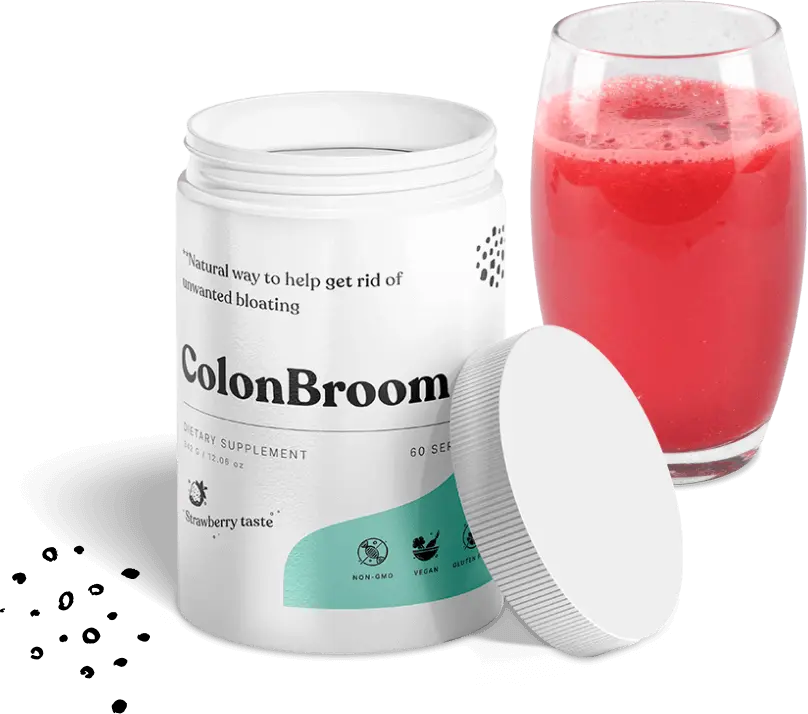
Plain psyllium powder is inexpensive but gritty and bland, which is why many people give up on it. Flavored fiber drinks aim to fix that. ColonBroom, for example, is a psyllium husk powder with natural fruit flavor and stevia, marketed for regularity, occasional bloating and feeling lighter. It's vegan, gluten-free and non-GMO, according to the brand.
The trade-off is cost: you pay more per gram of fiber than for plain psyllium. If taste is what keeps you consistent, that may be worth it. Read our full ColonBroom review for ingredients, pricing and refund terms.
Whichever product you choose, the same rules apply: check the fiber grams per serving on the label, follow the directions, start low and drink plenty of water.
When Bloating Isn't About Fiber
Psyllium helps most when bloating comes from constipation. Other common causes include:
- Swallowed air from eating quickly, chewing gum, drinking through straws or carbonated drinks.
- Gas-producing foods like beans, cabbage, onions and some sugar-free sweeteners (sorbitol, mannitol).
- Lactose intolerance, which becomes more common with age.
- Irritable bowel syndrome (IBS).
- Some medications, including certain pain relievers and iron supplements, which can cause constipation.
The NIDDK suggests keeping a food diary to spot patterns. Bloating that's constant, getting worse or comes with weight loss, vomiting or pain is a reason to see your doctor.
A Gut-Friendly Day: Putting It Together
Fiber works best as part of a routine. Here's what a regularity-friendly day can look like:
- Morning: a glass of water when you wake up, then oatmeal or whole-grain toast with fruit. Many people find a warm drink and breakfast help trigger a bowel movement.
- Mid-morning: your psyllium serving in a full glass of water, at least two hours away from medications.
- Lunch: a salad or vegetable soup with beans or lentils.
- Afternoon: a 15–20 minute walk. Movement helps the intestines move too.
- Dinner: half the plate vegetables, a portion of protein and a whole grain.
- All day: sip water regularly, and don't ignore the urge to go.
Common Mistakes
- Starting with a full dose. This is the number one reason people quit because of gas.
- Not drinking enough water. Fiber needs fluid to work.
- Letting the drink sit. Psyllium thickens fast; mix and drink right away.
- Taking it with your pills. Keep a two-hour gap.
- Giving up after a few days. Your gut needs one to two weeks to adjust.
Who Should Be Careful
- People with trouble swallowing or narrowing of the esophagus or intestines.
- Anyone with sudden changes in bowel habits, blood in the stool or severe abdominal pain: see a doctor first.
- People with diabetes: fiber can affect blood sugar after meals, which is usually helpful, but medication doses may need review.
- Rarely, people develop an allergy to psyllium.
- Anyone who has had bowel surgery or has a history of bowel obstruction should ask their doctor before using bulk-forming fiber.
Also, never take psyllium dry or with too little liquid. Because it swells, it should always be mixed with a full glass of water to avoid choking or blockage.