Akkermansia and Weight Management: What the Gut-Metabolism Research Shows
Your gut is home to trillions of bacteria, and scientists are increasingly interested in how they influence metabolism, appetite and weight. One species stands out: Akkermansia muciniphila. It's been called the “metabolism microbe,” and it's now showing up in probiotic and weight-management supplements. Here's what the research actually shows, what's still unknown, and how to support it through diet.
- Akkermansia muciniphila lives in the protective mucus layer of the gut lining.
- People with obesity and type 2 diabetes tend to have lower levels of Akkermansia in studies.
- A small human trial found pasteurized Akkermansia improved some metabolic markers, with modest effects on weight.
- Polyphenol-rich foods and fiber appear to support Akkermansia naturally.
A Supplement That Uses Akkermansia
What Is Akkermansia?
Akkermansia muciniphila is a bacterium that lives in the mucus layer lining your intestines. It feeds on that mucus, which sounds harmful but actually seems to stimulate the gut to produce more of it, helping maintain a healthy gut barrier. In healthy adults, it can make up a small but meaningful share of gut bacteria.
It was first identified in 2004 by researchers in the Netherlands, which is why it's a newcomer compared with long-studied probiotics like Lactobacillus and Bifidobacterium. Unlike those, it isn't found in yogurt or other fermented foods. It's a native gut resident that you either have in larger or smaller amounts, depending on your diet, health and other factors.
How Akkermansia Is Thought to Work
Scientists are still piecing this together, but most of the research points to the gut barrier. Your intestinal lining is protected by a layer of mucus and tightly joined cells. When that barrier is weaker, fragments of bacteria can slip into the bloodstream and trigger low-grade inflammation, which is linked to insulin resistance and weight gain.
In a 2013 mouse study published in PNAS, Akkermansia levels dropped in mice fed a high-fat diet, and restoring them thickened the mucus layer and reduced fat gain and blood sugar problems. A follow-up 2017 mouse study in Nature Medicine found that a specific protein on the bacterium's outer membrane, and even the pasteurized (heat-inactivated) bacterium, produced similar benefits.
Other proposed mechanisms include effects on gut hormones involved in appetite and blood sugar, and on how the body handles fat. These ideas come mostly from animal studies, and it's not yet clear how well they translate to people.
What the Research Shows
Observational studies. Many studies have found that people with obesity, type 2 diabetes or insulin resistance tend to have less Akkermansia than lean, metabolically healthy people. That doesn't prove cause and effect, but it sparked a wave of research.
Animal studies. In mice, adding Akkermansia improved blood sugar control, reduced fat gain and strengthened the gut barrier.
Human trials. In a small 2019 proof-of-concept study published in Nature Medicine, adults with overweight and insulin resistance who took pasteurized Akkermansia for 3 months saw improvements in insulin sensitivity and cholesterol, with small reductions in body weight and fat compared with placebo. Larger studies are still needed.
That human study was small: 40 people enrolled and 32 completed it. Participants took about 10 billion bacteria a day, either live or pasteurized, and the clearest benefits were seen with the pasteurized form. The difference in body weight versus placebo was about 2 kg (roughly 5 pounds) and was not statistically significant. Importantly, the supplement was well tolerated. It's a promising start, not proof that Akkermansia leads to meaningful weight loss.
Medication links. Interestingly, several studies have found that people taking a common diabetes medicine tend to have higher Akkermansia levels, which has led researchers to ask whether gut bacteria play a part in how some medicines work. This is an active area of research.
The NCCIH notes that probiotic research is promising but that effects depend on the specific strain and that many claims are ahead of the evidence.
Foods That Support Akkermansia
- Polyphenol-rich foods: cranberries, pomegranate, grapes, green tea, cocoa and apples.
- Fiber and prebiotics: onions, garlic, leeks, oats, beans and inulin.
- Fish oil (omega-3s) has been linked to higher levels in some studies.
- Less ultra-processed food: diets high in sugar and fat are linked to lower levels.
Polyphenols are plant compounds that give berries, grapes and tea their color and flavor. Only a small portion is absorbed; much of the rest reaches the colon, where it appears to create conditions in which Akkermansia thrives. A simple goal is to “eat the rainbow” every day: a cup of berries, a handful of grapes or an apple, a cup or two of green tea and plenty of colorful vegetables.
Fiber matters just as much. It feeds the wider gut community, and a diverse microbiome is generally considered a healthier one. Most US adults get far less than the recommended 22–34 g a day. Our psyllium husk guide covers easy ways to close the gap.
Live vs. Pasteurized Akkermansia
You may see both forms on the market:
- Live Akkermansia contains active bacteria. It's an anaerobic organism, meaning oxygen harms it, so manufacturing and storage are challenging.
- Pasteurized Akkermansia is heat-inactivated. In the mouse and human studies mentioned above, the pasteurized form performed at least as well as the live form on several metabolic markers, and in the small human trial it showed the clearer benefits. In Europe, pasteurized Akkermansia has been evaluated as a novel food.
Either way, check that the label names the form and amount, and follow the storage instructions.
Supplements: What to Look For
Akkermansia is a newer probiotic, and only a few products contain it. Look for:
- Named strain and CFU on the label.
- Supporting ingredients at meaningful doses, such as fiber.
- Realistic marketing: no promises of dramatic weight loss.
- A clear refund policy.
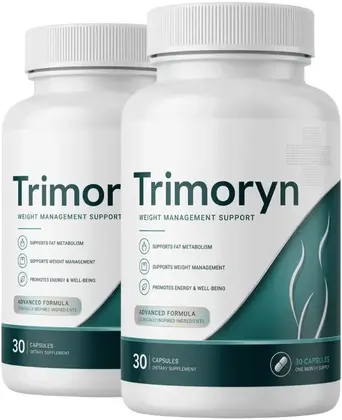
How Trimoryn Uses Akkermansia
Trimoryn is a once-daily capsule that combines Akkermansia muciniphila (1 billion CFU) and Bifidobacterium breve (1 billion CFU) with konjac glucomannan fiber, cinnamon bark, prickly pear, mangosteen, alpha lipoic acid, berberine, turmeric, resveratrol and riboflavin, according to its published label. A plus: the label discloses every dose.
Keep in mind that some botanicals, like berberine (15 mg), are included at much lower amounts than those used in clinical studies (typically 500–1,500 mg), so they play a supporting role. Read our full Trimoryn review for ingredients, pricing and refund terms.
Because it contains berberine and other botanicals, anyone taking diabetes medications, blood thinners or other prescriptions should review the label with their doctor or pharmacist before trying it.
What We Still Don't Know
- Whether supplements change weight meaningfully in larger, longer human trials.
- The right dose and form for different people.
- Whether higher Akkermansia is a cause or a result of better metabolic health.
- Long-term safety beyond a few months of use.
- Who benefits most. People start with very different gut bacteria, so responses may vary widely.
It's also worth remembering that, as the NCCIH points out, dietary supplements don't need FDA approval before they're sold, so label claims aren't reviewed in advance.
Who Should Be Cautious
- People with a weakened immune system, serious illness or recent surgery.
- Anyone who is pregnant or breastfeeding, since safety data are lacking.
- People taking diabetes medications, particularly with formulas that also contain berberine, cinnamon or alpha lipoic acid, because combined effects on blood sugar aren't well studied.
- Anyone with a chronic digestive condition such as inflammatory bowel disease.
The Bigger Picture
No probiotic replaces the basics. Protein and fiber at every meal, regular strength training, daily walking and good sleep remain the most reliable ways to support a healthy metabolism. See our guide to metabolism support after 40 for more options.
After 40, muscle mass naturally declines, and with it some of your daily calorie burn. That's why strength training two or more days a week and enough protein matter so much. The NIDDK also notes that sleep, stress, medications and genes all affect weight, not just diet.
If you've tried lifestyle changes for months without results and your BMI is in the range where medication is an option, talk to your doctor. Our guide to online GLP-1 programs explains how prescription options work.
A Realistic 12-Week Plan
- Weeks 1–4: add one polyphenol-rich food and one high-fiber food to each day. Walk after at least one meal a day.
- Weeks 5–8: start strength training twice a week, and aim for protein at every meal. If you choose to try a supplement, start now and take it consistently.
- Weeks 9–12: track waist size, energy and how your clothes fit, not just the scale. Review progress and any lab work with your doctor.
The diet and exercise changes in this plan are worthwhile on their own, whatever happens with your gut bacteria.
Frequently Asked Questions
Can Akkermansia help you lose weight?
What foods increase Akkermansia?
Is Akkermansia safe?
Is Akkermansia found in yogurt or fermented foods?
What's the difference between live and pasteurized Akkermansia?
Can I take Akkermansia with a GLP-1 medication?
How long does it take to work?
- NCCIH: Probiotics, what you need to know
- Depommier C. et al. Supplementation with Akkermansia muciniphila in overweight and obese human volunteers. Nature Medicine, 2019
- Everard A. et al. Cross-talk between Akkermansia muciniphila and intestinal epithelium controls diet-induced obesity. PNAS, 2013
- Plovier H. et al. A purified membrane protein from Akkermansia muciniphila or the pasteurized bacterium improves metabolism in obese and diabetic mice. Nature Medicine, 2017
- NIDDK: Factors affecting weight and health