Oral Probiotic Strains Explained: L. reuteri, L. paracasei, B. lactis and K12
Not all probiotics are created equal, and the ones in your yogurt or gut-health capsule aren't designed for your mouth. Oral probiotics use specific strains chosen to live in the mouth and support a healthy balance of bacteria on the teeth, gums and tongue. If you've ever looked at a label and wondered what “L. reuteri” or “3.5 billion CFU” means, this guide is for you. We'll walk through the strains with the most research behind them, how to read a label, how to take them correctly and what results you can realistically expect.
- Probiotic effects depend on the specific strain, not just the species.
- Strains commonly studied for oral health include L. reuteri, L. paracasei, B. lactis and S. salivarius K12.
- Oral probiotics should be chewed or dissolved slowly so they stay in the mouth.
- CFU (colony forming units) tells you how many live bacteria are in each dose.
An Oral Probiotic to Consider
Your Mouth Has Its Own Microbiome
Your mouth is home to hundreds of different bacterial species. They live on your teeth, along your gums, on the rough surface of your tongue and in your saliva. Most of them are harmless or even helpful. Problems tend to start when the balance tips toward the types that thrive on sugar, hide under the gumline or break down proteins into smelly sulfur compounds.
Brushing, flossing and mouthwash all reduce the total number of bacteria, but they don't choose sides. Within hours, the mouth starts to repopulate. The idea behind an oral probiotic is simple: add friendly strains right after cleaning, so that more of the space gets taken up by bacteria associated with a healthy mouth.
This is still a young area of research. Studies are generally small and short, and results vary by strain. But the basic concept, that the balance of bacteria matters as much as the total amount, is well accepted by dental researchers.
Why Strain Matters
A probiotic's name has three parts: genus (Lactobacillus), species (reuteri) and sometimes a strain code (like BL-04). According to NCCIH, effects seen with one strain don't necessarily apply to others, even within the same species. That's why quality products name their strains.
"Think of it like dog breeds. A Labrador and a Chihuahua are both dogs, but you wouldn't expect them to behave the same way. Two strains of L. reuteri can differ just as much in how well they stick to the gums, what substances they produce and how long they stay around.
You may also see newer scientific names on labels. In 2020, many Lactobacillus species were reclassified, so L. reuteri may appear as Limosilactobacillus reuteri and L. paracasei as Lacticaseibacillus paracasei. They're the same bacteria with updated names.
The Strains Most Studied for Oral Health
Lactobacillus reuteri. One of the most researched probiotics overall. Specific strains have been studied for gum health and for reducing bacteria linked to plaque.
Lactobacillus paracasei. Studied for its ability to compete with bacteria associated with cavities and gum problems.
Bifidobacterium lactis (BL-04®). A well-documented strain studied mostly for immune and digestive support, and included in several oral formulas.
Streptococcus salivarius K12 and M18. Strains originally isolated from the mouths of healthy people. K12 is the strain most associated with fresh breath research; M18 with teeth and gums.
"A fair caveat: most oral probiotic studies involve dozens, not thousands, of people, and they usually last weeks rather than years. They're encouraging, but they don't show that any strain treats gum disease or replaces dental care. Use them as a support for good habits, not a substitute.
Comparing the Main Oral Strains at a Glance
| Strain | Mainly studied for | Good to know |
|---|---|---|
| L. reuteri | Gum health, plaque-related bacteria | One of the most researched probiotics overall |
| L. paracasei | Competing with cavity- and gum-related bacteria | Often paired with other lactobacilli |
| B. lactis BL-04® | Immune and digestive support | Well-documented, branded strain |
| S. salivarius K12 | Fresh breath, tongue and throat | Originally found in healthy mouths |
| S. salivarius M18 | Teeth and gums | Often sold alongside K12 |
No single strain is “the best” for everyone. Many formulas combine two or more strains so they can cover different areas of the mouth, from the tongue to the gumline.
What CFU Means (and How Much You Need)
CFU stands for colony forming units, the number of live, active bacteria in a dose. Oral probiotics typically contain from 1 to 5 billion CFU. More isn't always better: the right strains in a reasonable dose, taken consistently, matter more than a huge number.
Look for products that guarantee CFU through the expiration date, not just at manufacture, and follow the storage instructions.
How to Read an Oral Probiotic Label
- Strain names listed clearly.
- CFU per serving.
- Format: chewable tablets, lozenges or melts, so the bacteria stay in the mouth.
- Prebiotics like inulin, which feed beneficial bacteria.
- No added sugar (sugar feeds the bacteria you don't want).
A Formula That Combines Three Strains
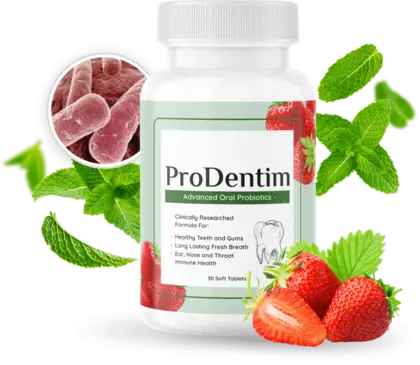
The product in the oral probiotics guide is ProDentim, a chewable oral probiotic with Lactobacillus paracasei, B. lactis BL-04® and Lactobacillus reuteri, for a total of 3.5 billion CFU, plus inulin and peppermint. You chew one tablet slowly every morning. It comes with a 60-day money-back guarantee.
How to Take Oral Probiotics
- Brush and floss first.
- Chew or dissolve the tablet slowly, moving it around your mouth.
- Avoid eating, drinking or using mouthwash for 30 minutes afterwards.
- Take it at the same time every day for at least 4–8 weeks.
Many people find it easiest to pair the habit with something they already do, like brushing before breakfast. If you prefer, you can take it at night after brushing instead, since saliva flow drops during sleep and the bacteria get a long, undisturbed stretch.
Chewables, Lozenges or Capsules: Why Format Matters
A gut probiotic capsule is designed to pass through the stomach and release bacteria in the intestines. That's the opposite of what you want for your mouth. Oral strains need contact time with your teeth, gums and tongue.
- Chewable tablets break up and spread across the mouth as you chew.
- Lozenges and melts dissolve slowly and are popular with K12 products.
- Powders can be swished, but they're less convenient.
- Swallowed capsules are a poor fit for oral health goals.
Whatever the format, take your time. Rushing through the tablet and swallowing it quickly means less time where the strains are meant to settle.
What to Expect, Week by Week
Oral probiotics are a slow, steady habit rather than a quick fix. A realistic timeline looks like this:
- Weeks 1–2: mostly about building the routine. Some people notice their mouth feels fresher in the morning; many notice nothing yet.
- Weeks 3–6: the period when most studies start to measure changes in breath or gum markers.
- Weeks 8–12: a fair point to judge whether the product is worth continuing for you.
Keep in mind that the friendly bacteria don't necessarily stay for good once you stop. Most people who like the results keep taking them daily, the same way they keep brushing.
Common Mistakes to Avoid
- Using strong antiseptic mouthwash right afterwards. It can wipe out the bacteria you just added. If you like mouthwash, use it at a different time of day.
- Eating or drinking right away. Give the strains about 30 minutes.
- Expecting it to replace brushing and flossing. Plaque still has to be physically removed.
- Skipping days. Consistency matters more than any single dose.
- Ignoring warning signs. Bleeding gums, loose teeth or persistent bad breath need a dentist, not just a supplement. Our article on why bad breath keeps coming back covers the most common causes.
Habits That Help Friendly Bacteria Thrive
A probiotic works best in a mouth that's set up for success. These everyday habits support a healthier balance of bacteria, with or without a supplement:
- Cut back on sugary snacks and sipping sweet drinks through the day. Sugar feeds the bacteria linked to cavities.
- Stay hydrated. Saliva is your mouth's natural rinse, and dry mouth becomes more common after 50, often because of medications.
- Clean your tongue daily with a scraper or your toothbrush.
- Floss or use interdental brushes once a day to clean where bacteria hide.
- Don't smoke. Smoking is a major risk factor for gum disease.
- See your dentist regularly for cleanings, which remove hardened tartar no home routine can.
Storage and Quality Tips
Probiotics are living organisms, so heat, moisture and time all reduce the number of live bacteria. Keep the container tightly closed, away from the bathroom steam and the hot car. Some products need refrigeration; others are shelf-stable. Follow the label.
Dietary supplements, including probiotics, don't need FDA approval before they're sold, so quality varies. Products that name their strains, state CFU through the expiration date and come from established manufacturers are a safer starting point.
How ProDentim Uses These Strains
If you'd rather not build a routine from separate products, ProDentim combines several of the strains covered above in one chewable: L. paracasei, B. lactis BL-04® and L. reuteri, for a total of 3.5 billion CFU per tablet. That's in the range used in many oral probiotic studies.
Because ProDentim is a chewable, the probiotics are released in the mouth, which is where you want them for breath and gum support. Take ProDentim once a day after brushing, ideally at night, and give it several weeks. Our ProDentim review covers the full label, price per bottle and the 60-day guarantee.