GLP-1 Patches vs. Ozempic: What's the Real Difference? (2026)
Since Ozempic and other GLP-1 medications became household names, a wave of “GLP-1” products has appeared online: patches, drops, gummies. Many people understandably wonder whether a $49 patch can do what a prescription injection does. The honest answer is no, and they're not supposed to. But that doesn't mean patches are useless, or that prescription medication is right for everyone. This guide explains, in plain language, what each option actually is, what it costs, its risks, and who it suits.
- Ozempic, Wegovy, Mounjaro and Zepbound are prescription medications (semaglutide or tirzepatide). GLP-1 patches contain no medication.
- GLP-1 patches are plant-based, botanical support products for cravings and appetite. Results are modest and vary.
- Prescription GLP-1 drugs require a provider, can cause digestive side effects and aren't suitable for everyone.
- Compounded semaglutide and tirzepatide are not FDA-approved; only buy through licensed providers and pharmacies.
The Two Options in This Comparison
What GLP-1 Is (in Plain English)
GLP-1 (glucagon-like peptide-1) is a hormone your gut releases after you eat. It helps the body release insulin, slows how fast the stomach empties, and signals fullness to the brain. Natural GLP-1 only lasts a few minutes in the body.
Medications like semaglutide (Ozempic, Wegovy) and tirzepatide (Mounjaro, Zepbound) mimic this hormone, but they're engineered to last for days. That's why they're injected once a week and why their effect on appetite is so strong.
Nothing in a skin patch, gummy or drop can deliver a GLP-1 drug without a prescription. When a supplement uses “GLP-1” in its name, it refers to ingredients chosen to support appetite and healthy blood sugar, not to the medication.
Side by Side: The Key Differences
Here's how a plant-based patch and provider-guided GLP-1 care compare on the points that matter most. Tap the features you care about to highlight them.
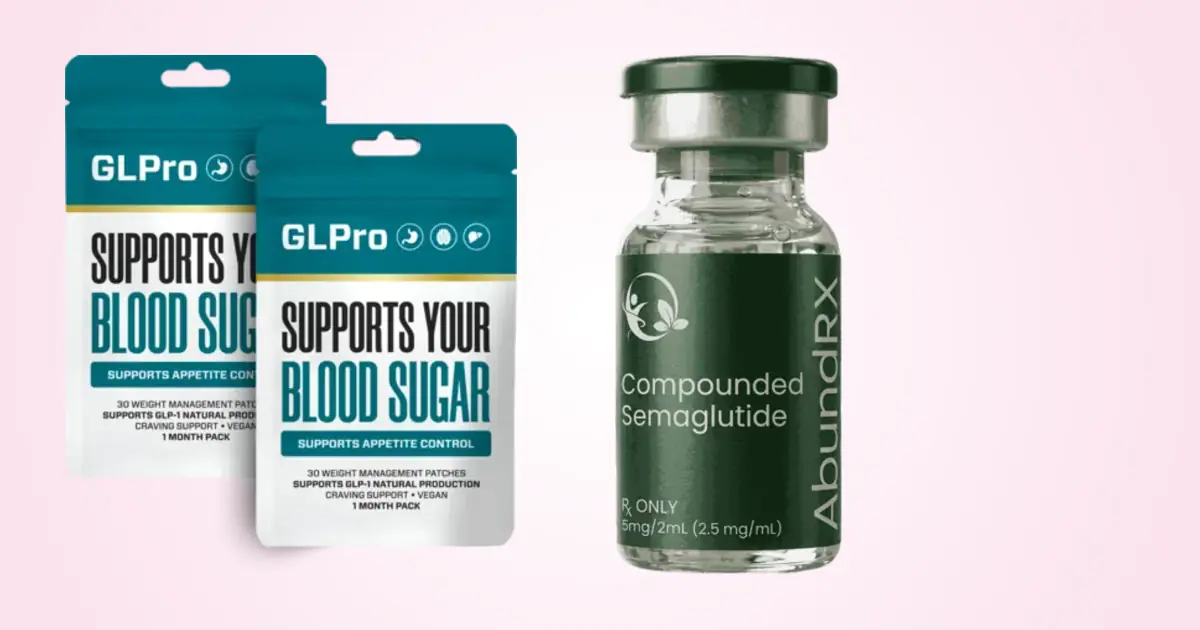
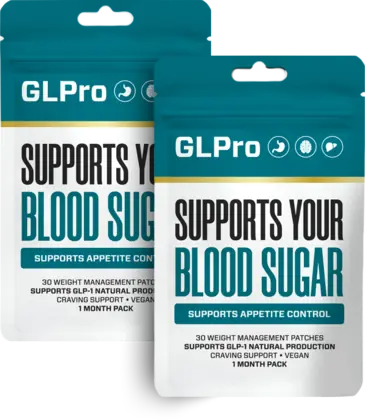 GLPro Patches | 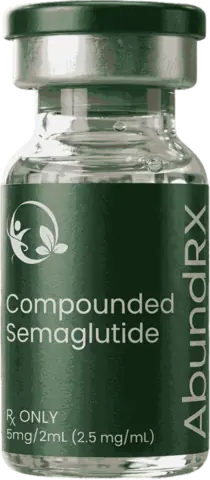 AbundRX | |
|---|---|---|
| What it is | Botanical support patch | Telehealth program for prescription GLP-1 care |
| Prescription | No | Yes, after a provider review |
| Contains medication | No (no semaglutide or tirzepatide) | Compounded semaglutide or tirzepatide, if prescribed |
| Routine | 1 patch a day | Once-weekly, if prescribed |
| Price | $49–$79 per pack | From $99 (sema) / $149 (tirz) |
| Side effects | Possible skin irritation | Nausea, vomiting, diarrhea, constipation and more |
| Guarantee | 60 days | See program terms |
GLP-1 Support Patches: What to Expect
GLPro is a good example of this category. You apply one patch a day to clean, dry skin, and its plant-based blend is designed to support appetite control, fewer cravings and healthy blood sugar. It's vegan, plant-based and made in the USA, with a 60-day money-back guarantee. Two packs cost $79 each, three cost $69 each and six cost $49 each.
Realistic expectations: a patch can be a helpful daily cue and support for people whose main struggle is snacking and sweet cravings. It won't produce the weight loss seen in clinical trials of prescription GLP-1 drugs, and results depend heavily on your eating habits. Read our full GLPro review.
Who it suits: adults who want a simple, needle-free, prescription-free routine to support appetite and cravings.
Prescription GLP-1 Care: What to Expect
Prescription GLP-1 treatment starts with a medical evaluation. In a telehealth program like AbundRX, you complete an online health assessment, and a licensed provider decides whether compounded semaglutide (from $99) or compounded tirzepatide (from $149) is appropriate. If prescribed, medication ships from a licensed pharmacy.
Important facts:
- Brand-name GLP-1 medications are FDA-approved. Compounded versions are not FDA-approved and haven't been evaluated by the FDA for safety, effectiveness or quality. The FDA has published concerns about unapproved GLP-1 products.
- Common side effects include nausea, vomiting, diarrhea and constipation. Serious risks are possible, and these drugs aren't for people with a personal or family history of medullary thyroid cancer or MEN2, or during pregnancy.
- Never buy semaglutide or tirzepatide from a website that doesn't require a prescription.
Who it suits: adults who meet medical criteria and want a provider-guided approach. Read our full AbundRX review.
Ozempic, Wegovy, Mounjaro, Zepbound: Who's Who
The brand names can be confusing, so here's a quick map of the FDA-approved, brand-name GLP-1 medications people search for most:
| Brand | Active ingredient | FDA-approved use |
|---|---|---|
| Ozempic | Semaglutide | Type 2 diabetes |
| Wegovy | Semaglutide | Chronic weight management |
| Mounjaro | Tirzepatide | Type 2 diabetes |
| Zepbound | Tirzepatide | Chronic weight management |
The weight-management versions are generally approved for adults with a BMI of 30 or higher, or 27 or higher with at least one weight-related condition such as high blood pressure or type 2 diabetes, used alongside a reduced-calorie diet and more physical activity. Semaglutide works through the GLP-1 pathway; tirzepatide works through both the GIP and GLP-1 pathways.
When people say “Ozempic for weight loss,” they usually mean the semaglutide family in general. Compounded semaglutide and tirzepatide, like those offered through telehealth programs, contain the same active ingredients but are not the FDA-approved brand products.
What the Research Shows (and Doesn't)
Prescription GLP-1 medications have been studied in large clinical trials. In the STEP 1 trial, adults with overweight or obesity who took once-weekly semaglutide (2.4 mg) for 68 weeks lost about 15% of their body weight on average, compared with about 2% on placebo. In the SURMOUNT-1 trial, tirzepatide led to average losses of roughly 15% to 21% over 72 weeks, depending on the dose. Both trials included diet and activity counseling, and individual results varied widely.
Two important caveats: those trials studied FDA-approved brand-name products, not compounded versions, and many people regain weight after stopping the medication, which is why it's often discussed as a long-term treatment.
GLP-1 support patches have no comparable body of research. There are no large clinical trials showing that a botanical patch raises GLP-1 levels or produces meaningful weight loss. That doesn't make a patch pointless; it means the right way to think about it is as a plant-based daily support tool for cravings and routine, not as an alternative to medication.
Red Flags When Shopping for “GLP-1” Products Online
- A supplement or patch that claims to “work like Ozempic” or to contain semaglutide. A legitimate plant-based product won't say that, and a product that actually contained the drug without a prescription would be illegal.
- Semaglutide or tirzepatide sold without a prescription or with only a quick checkbox questionnaire and no licensed provider review.
- “Research use only” or “not for human consumption” vials. These are not meant for people and their quality is unknown.
- Salt forms such as semaglutide sodium or semaglutide acetate. The FDA has warned that these are different from the active ingredient in approved medications.
- No pharmacy information. A legitimate program tells you that medication comes from a licensed pharmacy and explains its terms up front.
For a deeper look at how online programs work, see our guide to online GLP-1 programs: what to know.
Getting the Most From a GLP-1 Patch
- Apply it at the same time each day, for example after your morning shower, so it becomes automatic.
- Use clean, dry, hair-free skin such as the upper arm or shoulder, and rotate the spot each day to reduce irritation.
- Patch-test first if you have sensitive skin or have reacted to bandages before.
- Pair it with a craving plan: protein at breakfast, a planned afternoon snack, and sweets kept out of sight.
- Track two numbers for 8 weeks: how many unplanned snacks you have per day and your weekly weight. That tells you far more than how you feel on any single day.
Protecting Muscle While You Lose Weight
Whichever route you choose, losing weight can mean losing some muscle along with fat, and that matters more after 40, when muscle naturally declines. A few habits help:
- Prioritize protein at every meal (eggs, Greek yogurt, fish, chicken, beans, tofu).
- Strength-train two or more days a week: bodyweight squats, resistance bands or light weights all count.
- Eat enough fiber and drink enough water, which also helps with the constipation some people get on GLP-1 medications.
- Eat slowly and stop at comfortably full. On prescription GLP-1 drugs, large or high-fat meals are a common trigger for nausea.
Cost Over Three Months
| GLP-1 patch (GLPro) | Provider-guided GLP-1 (AbundRX) | |
|---|---|---|
| Starting price | $69/pack on 3 packs ($207 + shipping) | From $99 (semaglutide) or $149 (tirzepatide) |
| What's included | 90 patches (6-pack: $49/pack, $294, free shipping + gifts) | Provider review and medication if prescribed (see program terms) |
| Insurance | Not applicable | Check program terms |
Program pricing can change with dose and plan, so always confirm the full cost before you start.
Which Should You Choose?
- Choose a plant-based patch if cravings and snacking are your main obstacle, you want to avoid medication and needles, and you're ready to pair it with better eating habits.
- Talk to a provider about prescription GLP-1 if you have significant weight to lose or weight-related health conditions, and you're comfortable with medical supervision and possible side effects.
- Either way, protein, fiber, strength training and sleep remain the foundation. See our guide to metabolism support after 40.
Who Should Skip Each Option
A plant-based patch may not be right for you if:
- You have very sensitive skin, eczema in the usual application areas, or an adhesive allergy.
- You're pregnant or breastfeeding (check with your doctor before using any supplement).
- You have diabetes and take blood sugar medication, unless your doctor agrees, since products aimed at blood sugar support are worth reviewing together.
- You need significant, medically supervised weight loss. In that case, a conversation with a provider is the better first step.
Prescription GLP-1 medication is generally not appropriate if:
- You or a family member have had medullary thyroid cancer, or you have MEN2.
- You're pregnant, planning a pregnancy or breastfeeding.
- You've had pancreatitis or certain serious stomach or gallbladder problems, unless your provider decides otherwise.
- You're looking for a non-prescription product. In that case, a telehealth program isn't the right fit.
Only a licensed provider who knows your full health history can decide whether prescription treatment is safe for you, so answer any health assessment honestly and completely.
Frequently Asked Questions
Do GLP-1 patches contain semaglutide?
Do GLP-1 patches work as well as Ozempic?
Is compounded semaglutide the same as Ozempic?
Can I get semaglutide without a prescription?
Can I use a GLP-1 patch while taking Ozempic or another GLP-1 drug?
Do GLP-1 patches have side effects?
What happens if you stop taking a GLP-1 medication?
Is tirzepatide stronger than semaglutide?
- Wilding JPH, et al. Once-Weekly Semaglutide in Adults with Overweight or Obesity (STEP 1). N Engl J Med. 2021
- Jastreboff AM, et al. Tirzepatide Once Weekly for the Treatment of Obesity (SURMOUNT-1). N Engl J Med. 2022
- FDA: Medications containing semaglutide marketed for type 2 diabetes or weight loss
- MedlinePlus: Tirzepatide injection
- FDA: Concerns with unapproved GLP-1 drugs used for weight loss
- NIDDK: Prescription medications to treat overweight and obesity
- MedlinePlus: Semaglutide injection